You’ve probably saved dozens of beautiful cottage house photos… wooden textures, cozy roofs, big windows. But the moment you think about actually building one, confusion starts.
“How much space do you need?”
“How to decide the floor plan?”
“How will budget control be done?”
I’ve seen this happen with many clients. Even recently, one family wanted a perfect cottage-style home but almost messed up their layout planning just because they focused too much on design, not on planning.
Let’s fix that.
What Actually Makes a Cottage House Different?
Cottage house is not just a design style. It’s more about feeling.
- Compact but comfortable
- focus on natural light
- Simple layout (no unnecessary rooms)
- Outdoor connection (garden, sit-out, balcony)
But here is the most important part construction planning + smart floor design.
If the planning goes wrong, the cottage house is not cozy, it seems cramped.
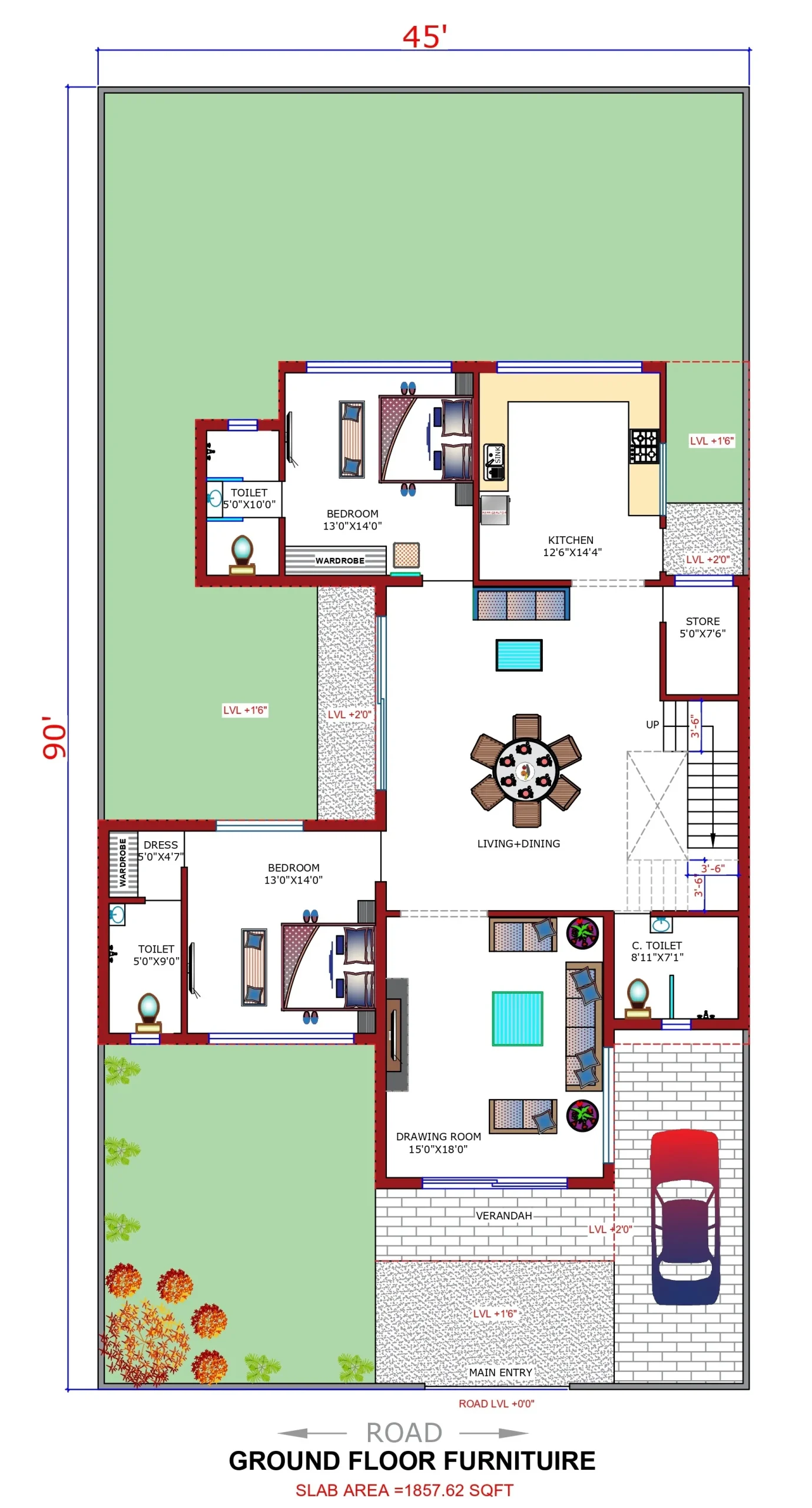
Understanding Cottage House Construction Plans
Construction planning does not mean just drawing walls.
It includes:
- Room placement
- structural layout
- ventilation planning
- sunlight direction
- Future expansion
Speaking from real experience – 70% of the problems on the site are solved at this stage, if the planning is strong.
Step-by-Step: How to Plan Your Cottage House
1. Start with Your Lifestyle (Not Pinterest)
The most common mistake is copying the log design.
Instead, ask yourself:
- How many logs will remain?
- Need work-from-home space?
- Do guests come frequently?
A client built 3 bedrooms, but used only 2 in the hotel. The remaining space was wasted.
Tip: The purpose of every room should be clear.
2. Choose the Right Plot Orientation
Light and airflow are very important in cottage homes.
- East-facing = morning sunlight
- North-facing = soft light all day
- West-facing = heat issue (need proper shading)
Personally, I always recommend planning windows and sit-out areas based on sun direction. This small change also reduces energy bills.

3. Keep the Layout Open & Connected
The charm of cottage homes lies in their openness.
Instead of:
- Separate living + dining + kitchen areas
Opt for:
- An open living + dining combo
- A semi-open kitchen
This makes the space feel larger, even within a small footprint.
4. Smart Floor Design Matters More Than Size
People often assume that a big house equals a better house.
Wrong.
- A smart layout is superior to sheer size.
Example:
- A well-designed 900 sq ft plan can feel more spacious than a poorly planned 1200 sq ft house.
- Avoid “dead spaces” (such as long corridors or unused corners).
Pro Tip: Every single square foot should serve a purpose.
5. Focus on Natural Ventilation
The true essence of a cottage home is derived from its airflow.
- Opposing windows (for cross-ventilation)
- High ceilings (for heat regulation)
- Skylights (for enhanced natural light)
I’ve seen it firsthand in homes with excellent ventilation, the need for air conditioning is reduced by nearly half.
6. Use Local Materials for Construction
This approach is both budget-friendly and aesthetically pleasing.
- Stone walls
- Wooden finishes
- Clay tiles
- Exposed brickwork
In one particular project, we utilized locally sourced stone this not only kept costs down but also gave the home a premium look.
7. Plan for Storage Smartly
Cottage homes should never feel cluttered.
- Built-in wardrobes
- Under-stair storage
- Hidden cabinetry
The Rule: Minimize visible storage and maximize hidden storage.
8. Leave Room for Future Expansion
Today you might need two rooms… but tomorrow, you might need three.
Therefore:
- Ensure the foundation is robust.
- Design the structural grid to be “future-ready.”
This type of forward planning helps you avoid costly demolition work down the road.
Smart Floor Design Ideas for Cottage Homes
Open Living Core
- Living + dining in one hi zone
- Center me seating, side me dining
Kitchen with Backyard Access
- Direct access to garden
- Better ventilation + utility space
Bedroom Placement
- Noise-free side pe
- Windows garden side
Compact Staircase (if duplex)
- Space-saving design
- Under-stair storage
Real Experience Tips
- Do electrical points planning first (breaking later)
- Keep the window size a little larger the light automatically improves.
- Keep false ceiling minimal (feel of height will be maintained)
- Outdoor sitting area must be included – this gives the cottage feel.
Common Mistakes to Avoid
❌ Overdesigning
Adding too many elements ruins the cottage simple feel.
❌ Ignoring Budget Planning
Using fancy materials without planning doubles the cost.
❌ Poor Room Placement
Bedroom kept on road side → noise problem lifelong.
❌ No ventilation planning
Closed house = uncomfortable living.
❌ Copy-Paste Floor Plans
Every plot is different. Copying is risky.
FAQs
1. What is the ideal size for a cottage house?
Usually 600–1200 sq ft works well. But smart planning is more important.
2. Is cottage house construction budget-friendly?
Yes, if you use local materials and simple design.
3. Which roof is best for cottage homes?
Sloping roof works best heat control + classic look.
4. Can I build a cottage house on a small plot?
Of course. Smart floor even a small plot can look spacious.
5. How to make a cottage house look premium?
Natural materials + good lighting + clean layout.
6. Is open layout a good idea?
Yes, especially for cottage homes. Space feels bigger.
7. How important is ventilation?
Very important. It affects comfort, health, and electricity bills.
8. Can I expand my cottage house later?
Yes, if you plan structure properly from the start.
Final Thoughts
Building a cottage house is not just a construction project… it’s about creating a peaceful lifestyle.
Simple design, smart floor planning, and practical construction decisions if this teen cheese is done right, your home will never look outdated.
In all the successful cottage homes I have seen, there is one common thing – clarity in planning.
So before you start construction, slow down… plan smartly… and build something that actually feels like home.