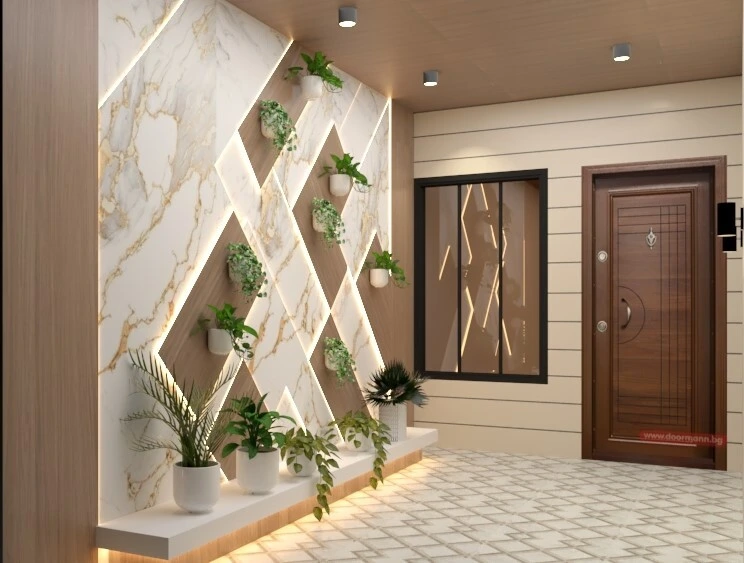
Choosing the right door and window sizes decides ventilation, light, privacy, and comfort.
Standard sizes help in planning and budgeting, while custom sizes improve usability and design.
The right mix of standard dimensions and smart placement creates a functional, future-ready home.
Standard Door Sizes for Indian Homes
Main doors and internal doors follow common size patterns for easy installation and cost control. Standard sizing reduces fabrication time and ensures availability of frames, shutters, and hardware.
- Main Door Standard Size: 3 ft x 7 ft
- Bedroom Door Standard Size: 3 ft x 7 ft
- Bathroom Door Size: 2.5 ft x 7 ft
- Kitchen Door Size: 2.5–3 ft x 7 ft
- Balcony Door Size: 5–6 ft width sliding door
Standard door thickness: 32 mm to 40 mm
Frame thickness: 100 mm to 125 mm
What Works Best for Main Doors
The main entrance door is not only functional but also impacts security, ventilation, and visual appeal.
Best practices for main doors:
- Minimum width: 3 ft for comfortable entry
- Height: 7 ft or more for spacious feel
- Material: Solid wood, engineered wood, or metal
- Opening direction: Inward opening
- Threshold height: 25–50 mm

Popular modern choices:
- Double leaf doors
- Pivot doors
- Teak finish laminated doors
- CNC carved doors
Standard Window Sizes for Homes
Windows control natural light, ventilation, and temperature. Standard window sizes ensure better airflow and lower construction cost.
Common window dimensions:
- Bedroom window: 4 ft x 4 ft
- Living room window: 5 ft x 4 ft
- Kitchen window: 3 ft x 4 ft
- Bathroom window: 2 ft x 1.5 ft
- Ventilator: 2 ft x 1 ft
Window sill height: 2.5 ft to 3 ft from floor
Lintel level: 7 ft
What Works Best for Windows
Standard sizing is useful, but placement matters more than size. Windows must allow cross ventilation and daylight without overheating interiors.
Best window placement tips:
- Living room: large windows facing north or east
- Bedrooms: two windows for airflow
- Kitchen: window above sink
- Staircase: vertical windows for light
- Bathroom: ventilator near ceiling
Best materials:
- uPVC windows
- Aluminium sliding windows
- Wooden frame windows
- Glass panel windows

Standard Door Height vs Ceiling Height
Door height must match ceiling proportion. Low doors in high ceilings look awkward and restrict airflow.
Recommended combinations:
- 9 ft ceiling → 7 ft door
- 10 ft ceiling → 8 ft door
- 12 ft ceiling → 8 ft or taller custom door
Tall doors create a spacious feel and improve airflow. They are now common in modern home design.
Sliding Doors and French Doors
Modern homes prefer sliding and French doors for balconies and patios.
Standard sliding door sizes:
- 5 ft x 7 ft
- 6 ft x 7 ft
- 8 ft x 7 ft
Best use areas:
- Balcony
- Garden opening
- Living room
- Dining space
Benefits:
- More natural light
- Space-saving
- Seamless indoor-outdoor connection
Ventilation and Natural Light Planning
Doors and windows must be sized according to room area.
Rule of thumb:
- Window area = 10%–20% of floor area
- Ventilator required in every bathroom and kitchen
- Cross ventilation improves indoor air quality
Best results come from:
- Opposite wall window placement
- Larger windows in living areas
- Smaller but higher windows in bathrooms
Vastu-Based Door and Window Dimensions
Many homeowners prefer Vastu-compliant sizes and placements.
Main door direction: North or East
Number of doors: Even number preferred
Main door size: Largest in the house
Window direction: East and North for light
Avoid:
- Main door facing directly into staircase
- Bathroom door opposite kitchen
- Window blocking airflow
Custom vs Standard: What to Choose
Standard sizes are budget-friendly. Custom sizes improve design flexibility.
Choose standard when:
- Budget is limited
- Quick construction needed
- Simple layout
Choose custom when:
- Large living room
- High ceiling
- Unique elevation design
- Premium home
Material Selection for Durability
Door and window size matters, but material quality ensures longevity.
Best door materials:
- Solid wood
- Flush door
- WPC door
- Metal door
Best window materials:
- uPVC
- Aluminium
- Wood
- Steel
Hardware essentials:
- SS hinges
- Door stopper
- Lock set
- Handle

Common Planning Mistakes to Avoid
- Small main entrance door
- No ventilator in bathrooms
- Windows only on one side
- Wrong sill height
- Oversized doors in small rooms
Correct planning improves airflow, lighting, and usability.
Conclusion
Choosing the right door and window sizes ensures better ventilation, natural light, and daily comfort in every room.Standard dimensions help maintain budget control and faster construction, while smart customization improves functionality and aesthetics. Proper placement and proportion make spaces feel larger, brighter, and more practical. A well-planned combination of standard sizing, quality materials, and correct positioning results in a home that performs efficiently for years. Careful planning at the design stage always delivers the best long-term results.
FAQs
1. What is the standard main door size in India?
3 ft x 7 ft is the most common.
2. What is the standard bedroom door size?
3 ft x 7 ft.
3. What is the standard window height from floor?
Around 3 ft.
4. Which window size is best for living room?
5 ft x 4 ft or larger.
5. Are taller doors better?
Yes, they improve ventilation and aesthetics.
6. What is the best material for main doors?
Solid wood or engineered wood.
7. What size should a bathroom window be?
2 ft x 1.5 ft.
8. Should all doors be same size?
Main door should be larger.
9. Are sliding doors better for balconies?
Yes, they save space and allow more light.
10. How many windows should a bedroom have?
At least two for cross ventilation.