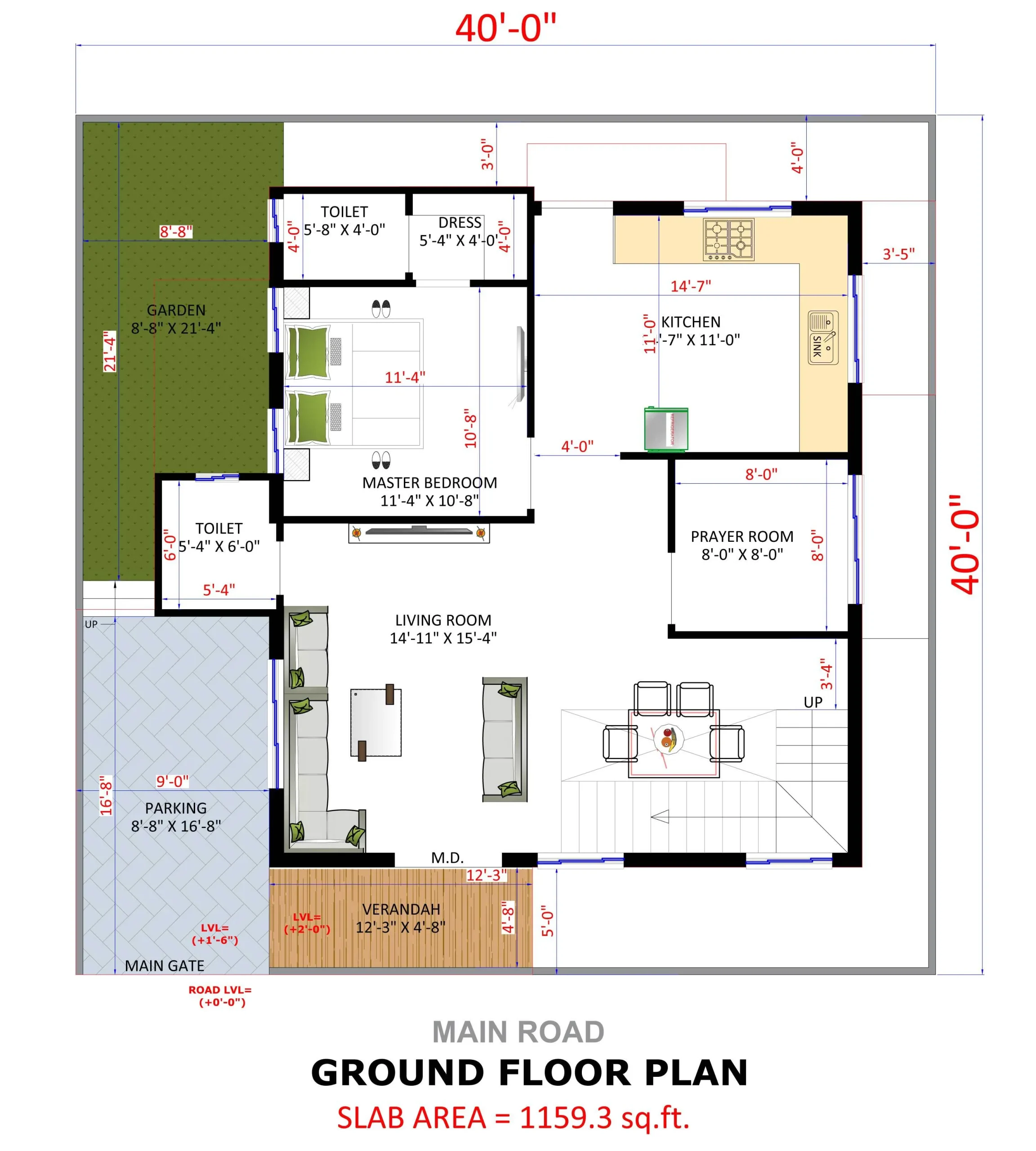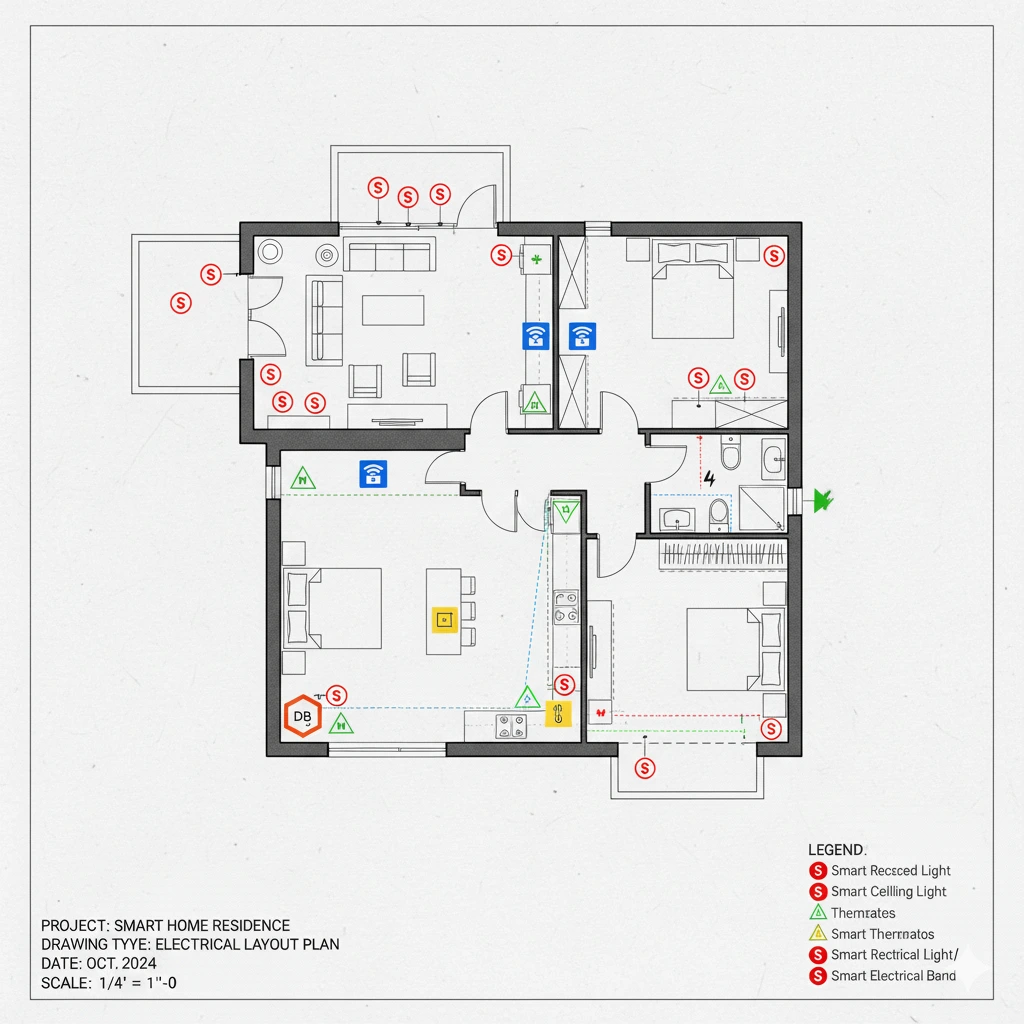
Proper electrical layout planning for smart homes ensures that switches, sockets, and lighting points are placed conveniently for daily use. With the right planning during construction, homeowners can avoid messy wiring, improve safety, and easily integrate smart devices in the future. A well-planned electrical system makes a home more comfortable, organized, and future-ready.
Electrical Layout Planning for Smart Homes
You shift into a newly built house. Everything looks perfect. Nice paint. Good furniture. Clean design.
But after a few weeks, small problems start appearing.
The switchboard is behind the bed. Charging points are too far from the sofa. The TV wall has only one socket but you need five. Extension boards started appearing everywhere.
This situation is very common in many homes.
People spend months planning architecture, elevation, and interiors. But electrical layout planning is often done in a hurry during construction.
I have personally seen homeowners regret not planning electrical points properly. Fixing these issues later means breaking walls or using messy wiring.
That is why Electrical Layout Planning for Smart Homes is extremely important. A well-planned electrical layout makes your home more comfortable, safe, and future-ready.
Let’s understand how to plan electrical layouts properly for modern homes.
What is Electrical Layout Planning?
Electrical layout planning simply means deciding where electrical points, switches, lighting, and appliances will be placed in your home.
It includes planning for:
- Switchboards
- Power sockets
- lighting points
- Fan points
- Appliance connections
- Internet and TV wiring
In modern homes, electrical planning also includes preparation for smart home devices.
Without proper planning, homes may face problems like limited sockets, messy wiring, or inconvenient switch locations.
Why Electrical Layout Planning is Important
Electrical systems are hidden inside walls. Once construction is complete, changing wiring becomes difficult.
Proper electrical planning helps in:
- Convenient switch locations
- Adequate charging points
- Safe appliance connections
- Clean interior design
- Future smart home upgrades
I once visited a house where the living room had only two power sockets. Later the owner had to install extra extension boards for the TV, speakers, router, and charging devices.
Good planning could have prevented that issue easily.

Electrical Layout Planning for Smart Homes
Modern homes require more electrical planning than traditional houses.
Let’s look at the most important elements.
Smart Switch Locations
Switchboards should always be placed where they are easy to reach.
Common comfortable switch heights include:
- 3.5 to 4 feet from floor level for switches
- 1 to 1.5 feet for plug points
Switchboards should never be hidden behind furniture.
I always recommend imagining furniture placement before finalizing switch positions.
Sufficient Power Sockets
Modern homes use many electrical devices.
Some common devices include:
- Mobile chargers
- Television
- WiFi routers
- Laptops
- Kitchen appliances
- Smart speakers
Planning extra sockets avoids the need for extension boards later.
Proper Lighting Layout
Lighting plays a huge role in home comfort.
A good lighting layout includes different types of lights.
Types of lights used in modern homes
- Ceiling lights for general lighting
- Wall lights for ambiance
- Under-cabinet lights in kitchens
- Study lights in work areas
Good lighting planning improves both comfort and aesthetics.
Smart Home Automation Wiring
Many homeowners today want smart features in their homes.
Examples include:
- Smart lights
- Smart switches
- Motion sensors
- Smart door locks
- Smart security systems
Even if you are not installing smart devices immediately, preparing wiring for them during construction is a smart decision.
Electrical Planning for Living Room
The living room usually requires the highest number of electrical points.
Typical points include:
- TV connection
- Sound system
- Internet router
- Charging sockets
- Decorative lighting
A dedicated TV wall with multiple power points keeps wires organized.
Kitchen Electrical Planning
Kitchens require careful electrical planning because of multiple appliances.
Common appliances include:
- Refrigerator
- Microwave
- Chimney
- Mixer grinder
- Dishwasher
Each appliance should have its own socket.
Avoid overloading a single plug point.
Bedroom Electrical Layout
Bedroom requires comfortable switch access.
Essential electrical points include:
- Bedside charging sockets
- Lamp switches
- Fan regulators
- AC socket
- TV point (optional)
Bedside switches are very convenient for controlling lights without getting up.
Bathroom Electrical Safety
Bathrooms require special electrical safety planning.
Electrical points should be placed away from water areas.
Common installations include:
- Exhaust fan
- Water heater connection
- Shaver socket
Always use proper waterproof electrical fittings.
Step-by-Step Electrical Planning Before Construction
Here is a practical process homeowners can follow.
Step 1: Understand Your Daily Needs
Think about the electrical devices you use daily.
This helps identify how many sockets you will need in each room.
Step 2: Plan Furniture Layout
Electrical points must match furniture placement.
For example:
- TV wall location
- Bed placement
- study desk position
Without this step, switchboards may get blocked by furniture.
Step 3: Plan Lighting Layers
Instead of relying on a single ceiling light, plan multiple lighting layers.
This improves both comfort and visual appeal.
Step 4: Prepare for Future Devices
Even if you don’t plan to install smart devices today, preparing wiring now avoids expensive modifications later.
Real Experience Tips from Home Projects
After observing several house constructions, a few lessons stand out.
Always add extra sockets
Modern homes always need more sockets than expected.
Avoid extension boards
Extension boards often create messy wiring and safety risks.
Keep switches accessible
Switchboards hidden behind cupboards or beds become inconvenient.
Plan internet wiring
A proper internet router location improves WiFi coverage across the home.
Common Electrical Planning Mistakes
Even new homes sometimes make these mistakes.
Too Few Power Points
This is the most common issue in many homes.
Extra sockets provide flexibility.
Ignoring Furniture Layout
Switchboards placed without considering furniture can become useless.
Poor Lighting Planning
Single ceiling lights make rooms feel flat and dull.
Layered lighting works better.
No Provision for Future Devices
Homes without planning for smart devices may require rewiring later.
FAQs
What is electrical layout planning in a house?
Electrical layout planning involves deciding the location of switches, sockets, lighting points, and wiring during the design stage.
Why is electrical planning important before construction?
Once walls are finished, changing electrical wiring becomes difficult and expensive.
How many power sockets should a living room have?
A modern living room usually needs multiple sockets for TV, speakers, chargers, routers, and lighting.
What height should switchboards be placed?
Switchboards are usually placed around 3.5 to 4 feet above the floor for comfortable access.
Should homes prepare for smart automation?
Yes. Planning wiring for smart devices during construction makes future upgrades easier.
Is electrical planning different for kitchens?
Yes. Kitchens require dedicated sockets for appliances like refrigerators, microwaves, chimneys, and mixers.
How can I avoid messy wiring in my house?
Proper electrical layout planning with enough sockets and organized wiring channels helps avoid visible cables.
Conclusion
A well-designed house is not just about beautiful walls and furniture. The comfort of daily living depends heavily on practical planning.
Understanding Electrical Layout Planning for Smart Homes helps homeowners create spaces that are convenient, organized, and future-ready.
From proper switch locations to smart device preparation, careful electrical planning improves both safety and usability.
I have personally seen homes where thoughtful electrical planning made daily life easier, while poor planning created constant inconvenience.
So when planning your home, give electrical layout the attention it deserves. A little planning today can save a lot of trouble tomorrow.