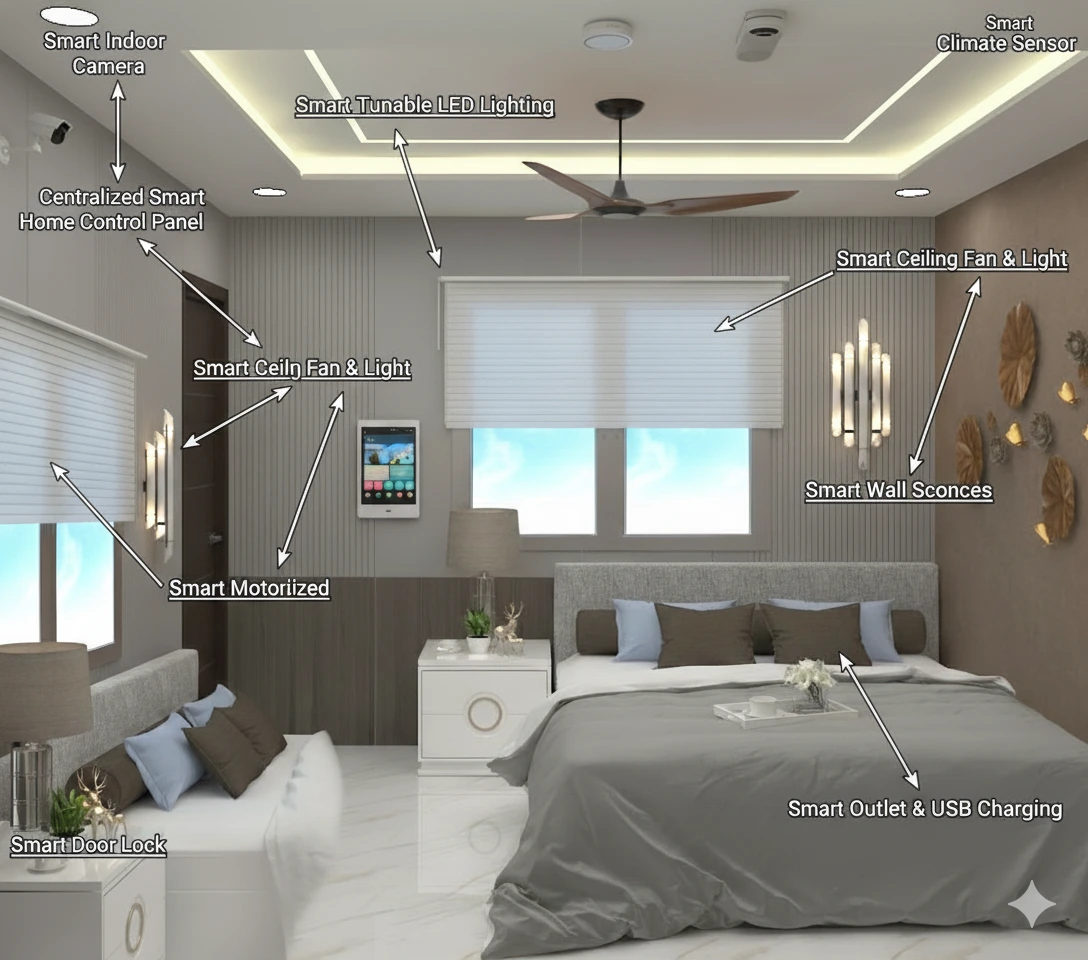
Planning smart home features during the construction stage saves cost, avoids rework, and gives a clean finish. With proper wiring and layout, you can easily add lighting, security, and automation systems. Early planning helps create a comfortable, modern, and future-ready home.
Your home is under construction… and everyone is focusing on tiles, paint, and the exterior elevation.
Then, 6–8 months later, you often hear a common regret:
“Man, why did adding smart home features after the fact turn out to be so difficult and expensive?”
Wiring has to be torn out and redone. Walls have to be cut into. And it incurs extra costs.
I have personally witnessed this on numerous sites people plan for smart home features after construction is complete… and then they are forced to make compromises.
The simple truth is this:
Smart home features should always be planned during the construction stage itself.
Let’s dive into the details of the Smart Home Features you should plan for during the construction stage.
What is a Smart Home?
In simple terms:
A smart home is a residence where you can:
- Control the lighting
- Operate fans and air conditioners
- Monitor security systems
And all of this:
- Via your mobile phone
- Using voice commands
- It is all managed effortlessly.
Why Plan for a Smart Home During Construction?
This is the most crucial part.
The benefits of planning during the construction stage include:
- Concealed wiring becomes possible
- It ensures a clean, seamless finish
- It keeps costs down
- Future upgrades are much easier
I observed a specific project where the client had planned everything in advance—and the entire house had a distinctly clean and modern feel.
Smart Home Features to Plan During the Construction Stage
Smart Lighting System
You can control your lights by:
- Using your mobile phone
- Dimming them to set the mood
- Setting automated schedules
Planning Tip:
Include provisions for extra wiring
Plan for adequate space to accommodate smart switches
Smart Switches & Automation Panels
Traditional switches are replaced by smart switches.
Benefits:
- Centralized control
- Effortless operation
Pro Tip:
Decide on the exact placement of your switchboards in advance.
Smart Security System
- Security is of paramount importance.
- Key components to include:
- CCTV cameras
- Video doorbells
- Motion sensors
Planning Tip:
- Plan the wiring for cameras early on
- Ensure proper placement at all entry points

Smart Door Locks
- Keyless entry systems offering:
- PIN access
- Fingerprint recognition
- Mobile app access
- Both convenient and secure.
Smart Thermostat & AC Control
Temperature control becomes intelligent and automated.
- Energy saving
- Comfort
Planning:
Keep AC wiring and placement proper
Home Automation Hub
It controls the entire system.
- All devices are connected hote
- Centralized control is available
Smart Curtains & Blinds
Automated curtains:
- Remotely open/close
- You can set the timer
Planning:
- Power point near windows
Smart Kitchen Appliances
- Kitchen can also be smart.
- Smart chimney
- Smart fridge
- Sensor based lighting
Step-by-Step: How to Plan Smart Home Features
Step 1: Decide Your Budget
- Add all the features together.
- By deciding priority.
Step 2: Choose Required Features
- Select where you will actually use it.
Step 3: Plan Wiring Layout
- Discuss with electrician and designer.
Step 4: Decide Device Placement
- Fix the placement of switches, cameras, sensors.
Step 5: Choose Reliable Brand
- Quality is important.
Step 6: Test System Before Finishing
- Please check the system before final finishing.
Real Experience Tips & Pro Advice
- Always plan extra conduits
- Future upgrades seem to be easy.
- Pay attention to Wi-Fi strength
- Smart devices depend on the internet.
- Avoid over-automation
- Simple and practical setup is better.
- keep manual control option
- It is helpful in power failure.
- Do not compromise on security
- Choose a reliable system.
Common Mistakes to Avoid
- Planning Smart Features Late
- Most common mistake.
- No Proper Wiring Plan
- Later issues are still created.
- Choosing Cheap Devices
- Performance issue is hot.
- Ignoring Internet Connectivity
- Devices do not work properly.
- Overcomplicating System
- Daily use seems to be difficult.

FAQs
What is the best time to plan smart home features?
During construction stage.
Is smart home expensive?
It depends on the features you choose.
Can smart home be added later?
Yes, but it is costly and difficult.
Do smart homes need internet?
Yes, most features depend on internet.
Is smart home safe?
Yes, if you use good quality systems.
Can small homes have smart features?
Yes, even small homes can use smart systems.
What is the most useful smart feature?
Smart lighting and security systems.
Conclusion
Building a smart home isn’t a luxury… it’s a matter of smart planning.
Planning for smart home features during the construction stage helps you create a future-ready home.
I have personally observed that those who plan early end up with a home that is clean, modern, and comfortable.
Conversely, those who add these features later face both extra costs and compromises.
So, always plan ahead.
If you put a little thought into it today… your home will be truly smart tomorrow.