Introduction
The strength of any building is indicated long before the walls rise. It begins with what lies beneath the surface the Sub-Structure Components in Building Construction. These below-ground elements create a stable base, ensure load distribution, prevent moisture damage, and support the entire super-structure. Moreover, understanding these components helps homeowners, architects, and contractors make informed decisions for long-term durability.
1. Foundation: Primary Sub-Structure Component in Building Construction
The foundation is the most crucial Sub-Structure Component in Building Construction, as it transfers the entire load of the building safely to the ground. Additionally, it helps maintain stability even during soil movement or environmental changes.
Foundation System
A foundation system is the structural base of any building. It transfers the weight of the building safely to the ground. The diagram divides foundations into two major categories:
1. Shallow Foundation
Shallow foundations are built near the ground surface. They are suitable for structures where the soil has good bearing capacity at a shallow depth. These foundations spread the load horizontally and are typically used for small to medium-sized buildings.

Types of Shallow Foundations:
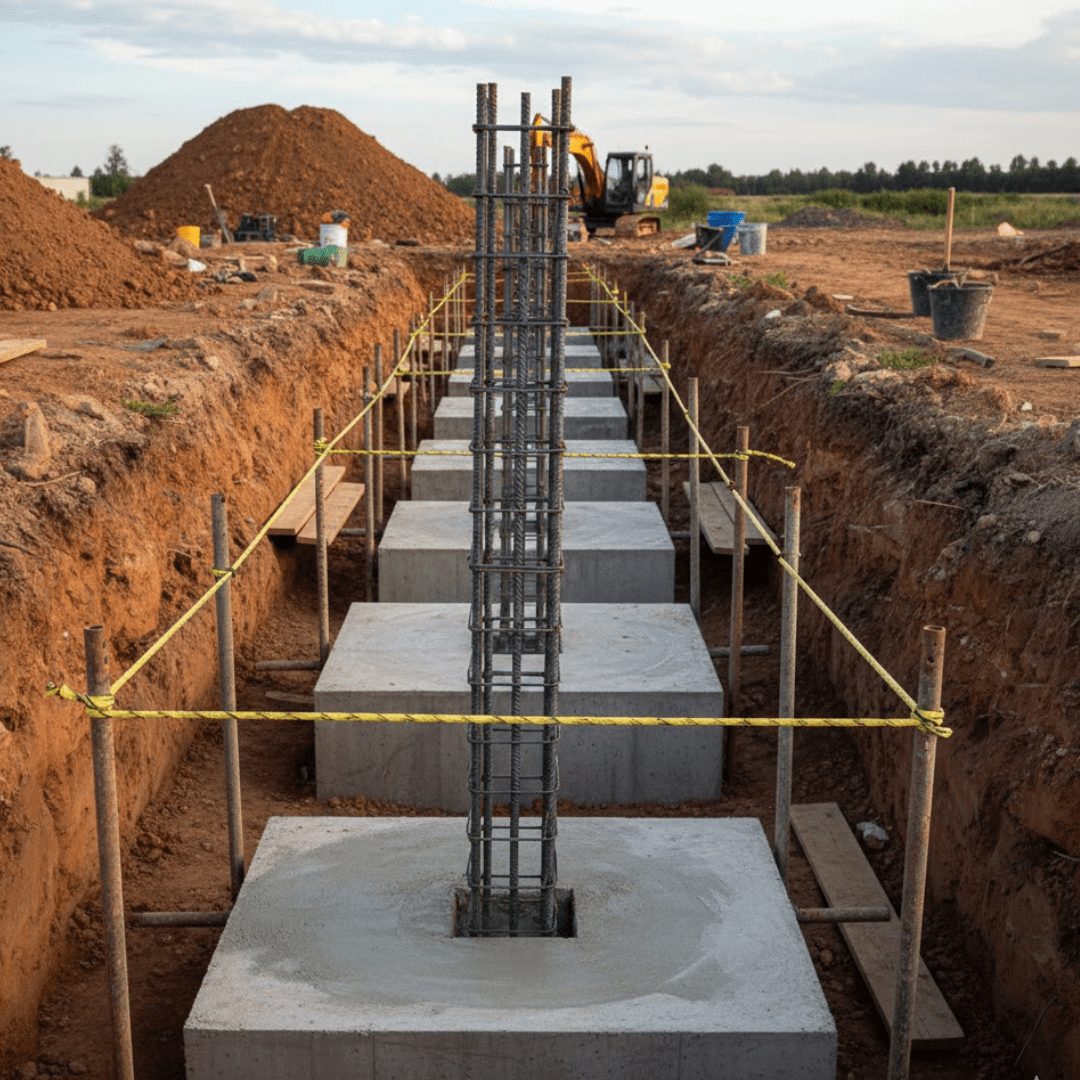
a) Isolated Spread Footing
- This footing supports a single column.
- Used when columns are far apart.
- The load is spread evenly through a square or rectangular concrete block.
b) Wall Footing
- Long, continuous footing built under load-bearing walls.
- Distributes load along the entire length of the wall.
- Common in residential homes with brick or block walls.
c) Combined Footing
- Supports two or more columns when they are close to each other.
- Used where one column is near the property line or space is limited.
- Ensures balanced load distribution between the columns.
d) Cantilever or Strap Footing
- Used when one column is near a boundary and a regular footing cannot be placed.
- A strap beam connects the footings of two columns.
- Allows both columns to share the load and stay balanced.
e) Raft or Mat Foundation
- A large slab covering the entire building area.
- Used when soil has low bearing capacity.
- Spreads the load of the entire structure evenly over a large area.
- Ideal for basements, commercial buildings, and soft soil conditions.

2. Deep Foundation
Deep foundations are used when the soil near the surface is too weak to support the structure. The building load is transferred to deep, strong soil layers or rock.
Types of Deep Foundations:
a) Pile Foundation
- Long, slender columns pushed deep into the ground.
- Used for soils with very low bearing capacity.
- Piles transfer load to deeper strata.
- Ideal for bridges, high-rise buildings, and waterlogged areas.
b) Pier Foundation
- A vertical, cylindrical foundation that transfers loads to solid ground.
- Built by drilling and filling concrete.
- Used for medium-depth support where soil is soft at top but strong at moderate depth.
c) Caisson Foundation
Commonly used in bridges, piers, and river structures.
A deep, large-diameter foundation used underwater or in soft soils.
Constructed by sinking a watertight box into the ground and filling it with concrete.
2. Plinth: Essential Sub-Structure Component in Building Construction
The plinth sits between the foundation and the floor level, and importantly, it protects the building from moisture, termites, and surface water. Since it acts as a barrier, the Sub-Structure Components in Building Construction cannot function effectively without a strong plinth.
Key Elements of a Plinth
- Plinth beam
- Plinth filling
- Damp-proof course (DPC)
Benefits
- Protects from rising dampness
- Provides a level base for walls
- Enhances structural rigidity
3. Basement Construction as a Sub-Structure Component in Building Construction
A basement is an extended part of the Sub-Structure Components in Building Construction, often used for parking, storage, or service areas. Furthermore, it requires careful waterproofing and structural planning since it remains in direct contact with soil. Additionally, proper ventilation and drainage systems are essential to prevent moisture buildup and maintain indoor air quality. A well-designed basement also enhances the overall strength of the structure by supporting load distribution. As a result, it adds both functional value and long-term durability to the building.
Must-Have Features
- Retaining walls
- Drainage system
- Sump pumps
Advantages
- Increases usable space
- Adds value to property
- Provides access for maintenance
4. Footings: Core Sub-Structure Components in Building Construction
Footings play a vital role by spreading the building’s load over a larger soil area. Without proper footing sizes, the entire structure may settle unevenly, which can lead to cracks or failure. Hence, footings remain one of the most essential Sub-Structure Components in Building Construction. Moreover, selecting the right footing type depends on soil strength, water table levels, and building load. Proper reinforcement and depth also ensure long-term stability and reduce the risk of structural damage. Therefore, well-designed footings act as the foundation’s strongest safeguard.

Types of Footings
- Isolated footing
- Combined footing
- Strip footing
- Raft footing
Role of Footings
- Distributes structural load
- Maintains building balance
- Protects against soil movement
5. Damp-Proof Course (DPC): Important Sub-Structure Component in Building Construction
The DPC is a vital moisture barrier in the Sub-Structure Components in Building Construction. It prevents groundwater from seeping into walls and floors, protecting the building from long-term damage. Additionally, a properly installed DPC helps avoid issues like damp patches, mold growth, and weakened wall strength. It also increases the overall life of the structure by stopping rising dampness. Thus, the DPC becomes a crucial layer for ensuring a healthy and durable home.
Common Materials
- Bitumen
- Polythene sheets
- Cement mortar with waterproofing compounds
Why DPC Matters
- Prevents damp patches
- Stops mold growth
- Increases building life
6. Soil Treatment as a Sub-Structure Component in Building Construction
For long-term safety, soil treatment becomes a critical element of the Sub-Structure Components in Building Construction. Additionally, it protects the structure from termite infestation and ensures stable ground conditions. Moreover, proper soil treatment enhances the load-bearing capacity of the soil and prevents future settlement issues. It also acts as a preventive shield against harmful microorganisms present underground. Therefore, soil treatment ensures that the building stands strong, durable, and damage-free for years.
Types of Soil Treatment
- Anti-termite treatment
- Soil stabilization
- Compaction
Purpose
- Improves soil strength
- Prevents pest damage
- Supports foundation performance
7. Retaining Walls: Supporting Sub-Structure Component in Building Construction
Retaining walls hold back soil and prevent erosion, especially on sloping ground. As an integral part of Sub-Structure Components in Building Construction, they help maintain stability and protect basement walls.
Types
- Gravity wall
- Cantilever retaining wall
- Counterfort wall
Benefits
- Controls soil pressure
- Prevents sliding
- Supports landscaping
8. Sub-Flooring: Final Sub-Structure Component in Building Construction
Sub-flooring lies above the plinth and creates a solid surface for the flooring material. Since it provides insulation and stability, it completes the list of essential Sub-Structure Components in Building Construction. Additionally, good sub-flooring helps prevent moisture buildup, which protects the upper flooring from damage. It also enhances comfort by reducing floor vibrations and unevenness. Overall, strong sub-flooring improves the durability and performance of the entire flooring system.
Sub-Flooring Materials
- PCC (Plain Cement Concrete)
- Screed layer
- Tiles bedding
Purposes
- Prevents moisture
- Levels the floor
- Enhances durability
Conclusion
To sum up, the Sub-Structure Components in Building Construction form the backbone of any durable, safe, and long-lasting building. From the foundation to retaining walls and DPC, each element contributes to stability and protection. Moreover, understanding these components helps homeowners and builders make smarter decisions, ensuring the building stands strong for decades.
FAQs
1. What are Sub-Structure Components in Building Construction?
Sub-Structure Components in Building Construction include all elements below ground level that support and protect the building.
2. Why is a foundation important in Sub-Structure Components?
Because it transfers the building’s load safely to the soil and prevents structural failure.
3. What is the purpose of a DPC?
A DPC (Damp-Proof Course) stops moisture from entering the walls and flooring.
4. Why is soil treatment necessary?
Soil treatment prevents termite attacks and improves ground stability for long-term safety.
5. What is the role of sub-flooring?
Sub-flooring provides insulation, stability, and a strong base for the final flooring material.