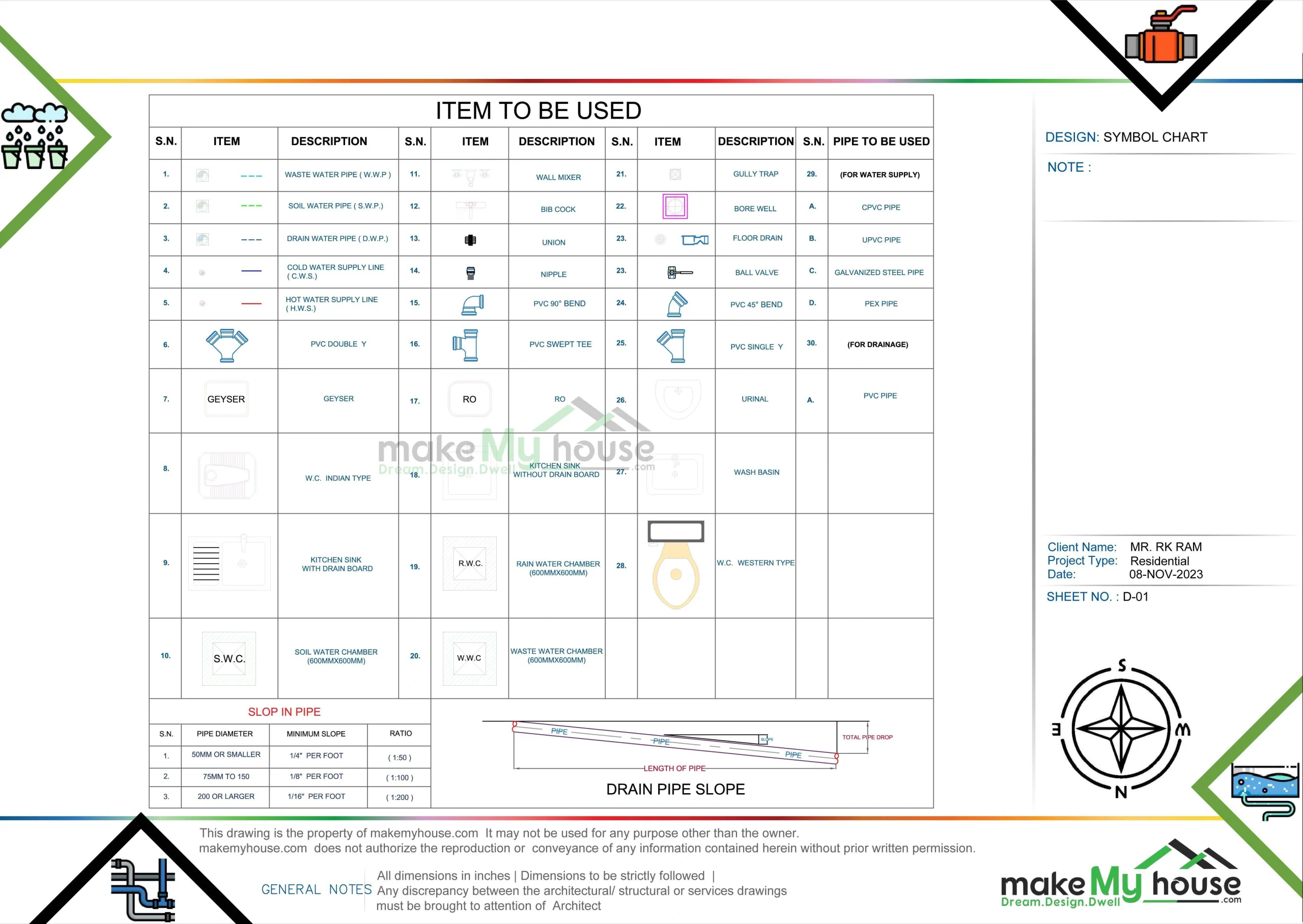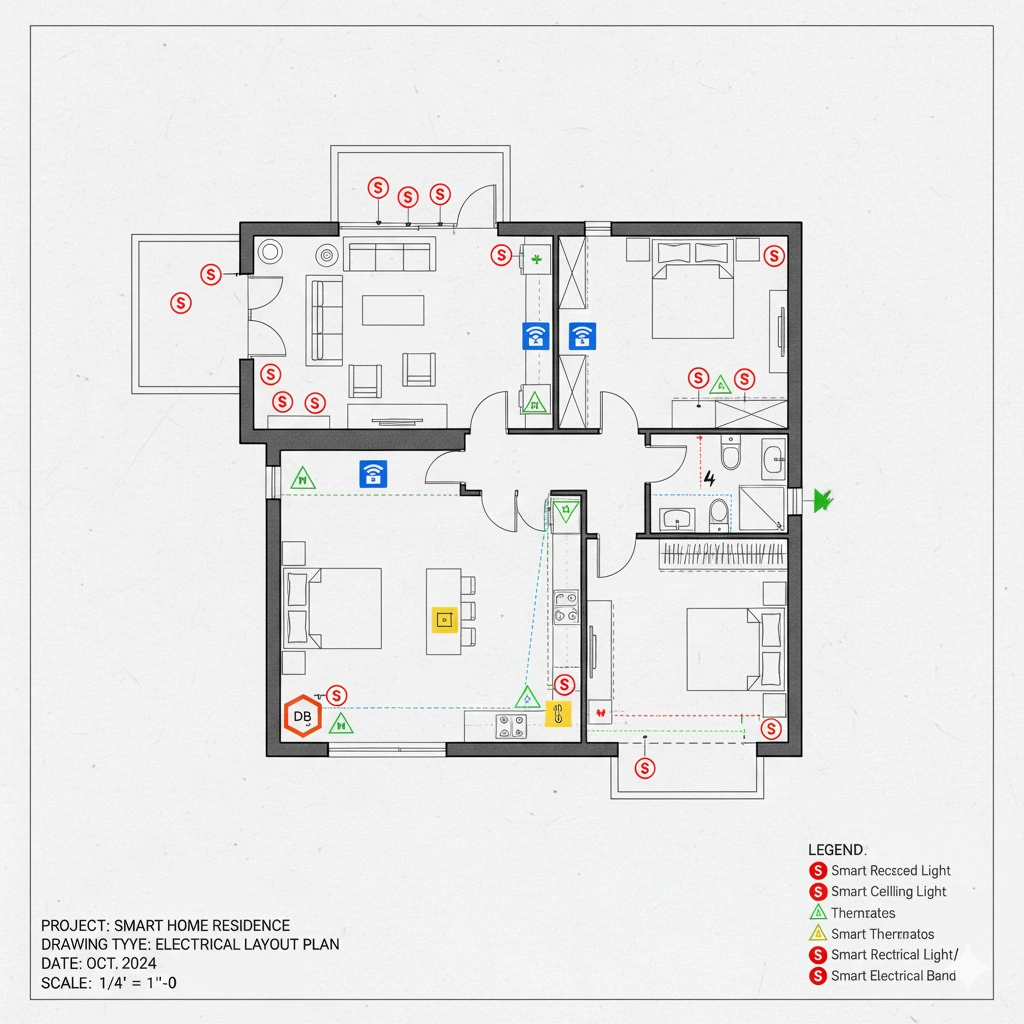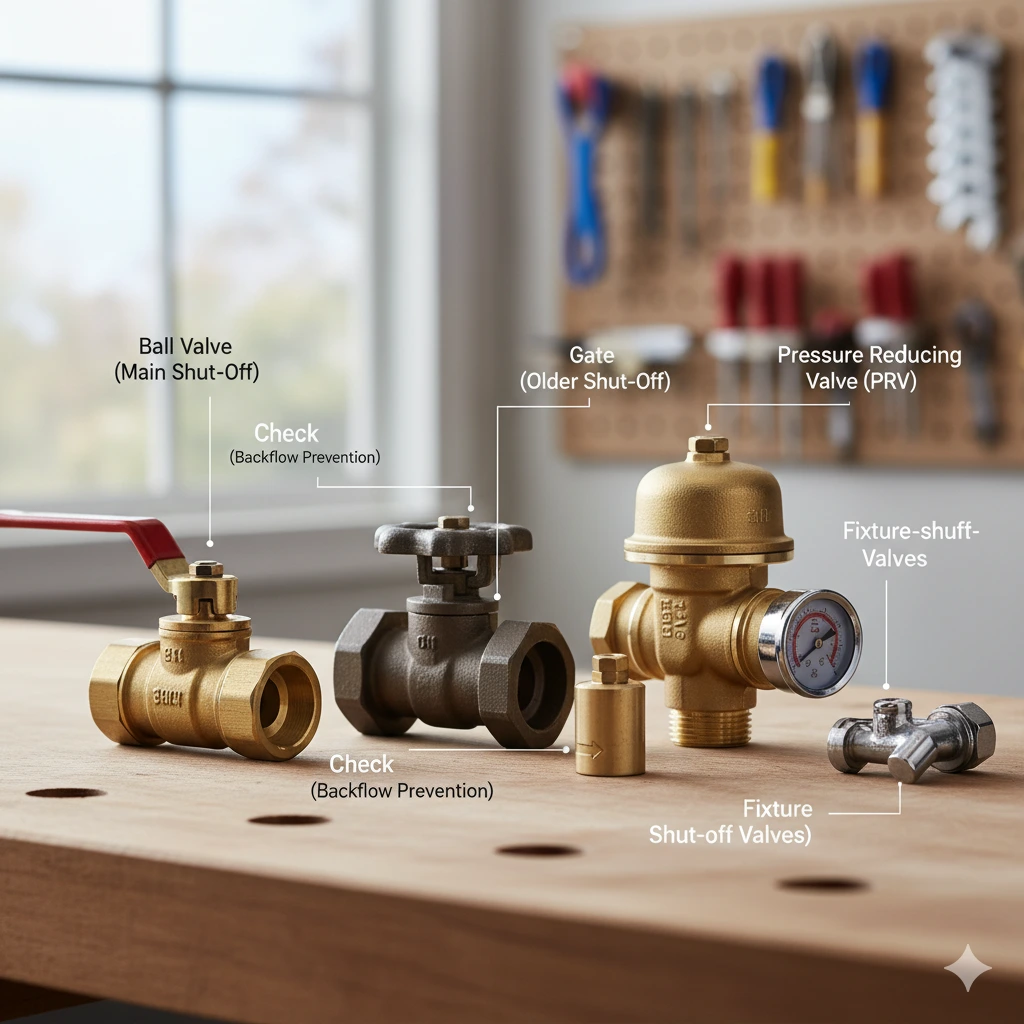
Proper plumbing planning is essential for independent houses to ensure smooth water flow, avoid leakage, and prevent costly repairs. By planning water supply, drainage, pipe layout, and ventilation in advance, you can create a hassle-free and long-lasting system. A well-designed plumbing system saves money, improves hygiene, and ensures comfortable daily living.
When building a home, the primary focus is usually on the design, elevation, tiles, and paint…
But when the time comes for plumbing, people often simply say “the plumber will handle it.”
And that is precisely where the biggest mistake lies.
Problems inevitably arise later on:
Low water pressure from taps, foul odors in the bathroom, hidden leaks within the walls, and clogged kitchen drains.
To be honest I have witnessed this firsthand during site visits 90% of plumbing issues could be resolved right at the planning stage.
Therefore, if you are building an independent house, this *Complete Plumbing Planning Guide for Independent Houses* is absolutely essential for you.
Let’s understand this step-by-step, in simple language.
What is Plumbing Planning in a House?
In simple terms:
- Plumbing planning entails:
- The routing of the water supply
- The flow of the drainage system
- The placement of pipes
- The setup of the water tank and motor
Essentially, deciding all of these details *before* construction begins.
If this isn’t planned correctly, repairs later on can become both costly and messy.

Why Plumbing Planning is Important in Independent Houses
In apartment flats, the plumbing systems are typically pre-determined.
However, in an independent house, you are responsible for deciding everything yourself.
Proper plumbing planning helps ensure:
- Smooth water flow
- Absence of leakage issues
- Improved hygiene
- Long-term cost savings
Personally, I once witnessed a project where the entire bathroom had to be demolished and rebuilt simply because the drainage slope was incorrect.
Therefore, do not overlook the planning stage.
Types of Plumbing Systems You Must Plan
Water Supply System
This system is dedicated to providing a clean water supply.
It includes:
- Overhead water tank
- Underground water tank
- Motor pump
- Network of pipes
Drainage System
Designed to safely carry wastewater away from the house.
It includes:
- Soil pipes (for toilet waste)
- Waste pipes (for kitchen and bath water)
- A system with proper slopes
Ventilation Pipes
This is a component that people often overlook.
However, it is extremely important.
- It prevents foul odors
- It maintains proper air pressure within the system
Rainwater Drainage
You must also plan for the collection or drainage of rainwater.
This helps prevent waterlogging.
Step-by-Step Plumbing Planning Guide for Independent Houses
Step 1: Group “Wet Areas” Together
Try to ensure that:
- Bathrooms
- Kitchen
- Utility areas
are aligned in a single line or located close to one another.
This results in:
- Reduced pipe length
- Lower costs
- Easier maintenance
Step 2: Plan the Water Tank Position
There are two main types:
- Overhead Tank
- Located on the roof
- Water flows via gravity
- Underground Tank
- Located at ground level
Water is pumped upwards using a motor
Tip:
Position the tank in such a way that all bathrooms receive equal water pressure.
Step 3: Select the Right Pipe Material
This is a very important decision.
Common options include:
- PVC pipes
- CPVC pipes
- UPVC pipes
Personal Experience:
Cheap pipes often become the cause of leaks in the future. Invest a little extra upfront to save yourself a lot of trouble later.
Step 4: Plan Pipe Routing Carefully
Do not run pipes randomly.
- Use straight lines
- Avoid excessive bends
- Properly plan for concealed plumbing
Excessive bends = Pressure loss + Increased risk of blockages
Step 5: Ensure Proper Drainage Slope
The slope is the most critical part of the system.
A slope is essential for proper water flow
- Flat pipes = Blockages
- Maintain an ideal slope in every drainage line.
Step 6: Install Proper Vent Pipes
- Vent pipes:
- Prevent toilet odors
- Stop gas buildup
This may seem like a minor detail, but it is extremely important.
Step 7: Plan for Access Points
For future maintenance needs:
- Install inspection chambers
- Install cleanouts
This ensures you won’t have to break down walls later on.
Step 8: Waterproofing is a Must
Do not neglect waterproofing in bathrooms and on the terrace.
I have personally witnessed this it is the most common cause of leaks.

Real-World Tips & Pro Advice
Always perform pressure testing
Test the pipes immediately after installation, before closing up the walls.
Do not hide joints unnecessarily
Hidden joints increase the risk of undetected leaks.
Install a separate drinking water line (if possible)
This is beneficial for better hygiene.
Keep future expansion in mind
Installing extra pipeline points can be very helpful for future renovations or additions.
Common Plumbing Mistakes to Avoid
Ignoring Planning Stage
“Look later” approach has proved costly.
Using Low-Quality Materials
Cheap pipes = future problems
Wrong Slope in Drainage
Water flow has stopped.
No Vent Pipes
Bad smell and pressure issues are created hote.
Overcomplicated Pipe Layout
Avoid too many bends and turns.
No Maintenance Access
Future repairs are becoming difficult.
FAQs
How much does plumbing cost in a house?
Usually 8–12% of total construction cost is incurred.
Which pipes are best for home plumbing?
CPVC and UPVC are commonly used and reliable.
How to avoid leakage in plumbing?
Proper installation + waterproofing + good materials.
What is ideal water pressure in house?
Moderate pressure is best. Too high pressure can cause damage.
Is separate drainage needed for kitchen?
Yes, it is better to treat kitchen waste separately.
How often plumbing maintenance required?
Basic inspection should be done in 1–2 years.
Can plumbing be changed later?
It is possible, but costly and messy.
Conclusion
Home plumbing is a hidden system.
It remains out of sight, yet the entire household depends on it.
If you execute the right planning right from the start, you will enjoy a stress-free life for years to come.
The Complete Plumbing Planning Guide for Independent Houses is not merely a guide; it is a smart decision that safeguards you against future problems.
I have personally witnessed the difference homes with planned plumbing run smoothly, whereas homes without proper planning face recurring issues.
Therefore, take your time, plan meticulously, and be sure to seek expert advice.