“The plot is small… is a spacious home even possible?”
Almost every client asks this question.
Whether it’s a 20×30 plot or a 25×40 one… everyone shares the same concern how do we maximize space?
I have personally handled numerous small-plot construction projects.
And one thing is crystal clear space isn’t created by size alone; it is created through construction planning.
On the exact same plot size, one house might feel cramped…
while another feels airy, open, and comfortable.
The difference?
Smart floor construction planning.
If you are currently building a home, or are still in the planning stage, these tips will provide you with practical, on-site assistance.
What is Smart Floor Construction Planning?
In simple terms:
It isn’t just about creating a floor plan.
It involves deciding *how* the construction will be executed to ensure that every single inch becomes usable space.
This includes:
- Structural layout
- Wall thickness
- Slab planning
- Staircase positioning
- Utility areas
In 2026, smart construction planning is the *only* true technique for saving space.
Why Smart Floor Construction Planning Matters
If you skip the planning stage:
- Space gets wasted
- Rooms feel awkward or disproportionate
- Storage becomes a major issue
If you engage in smart planning:
- The home feels much larger
- Movement within the house is effortless
- Every corner is utilized effectively
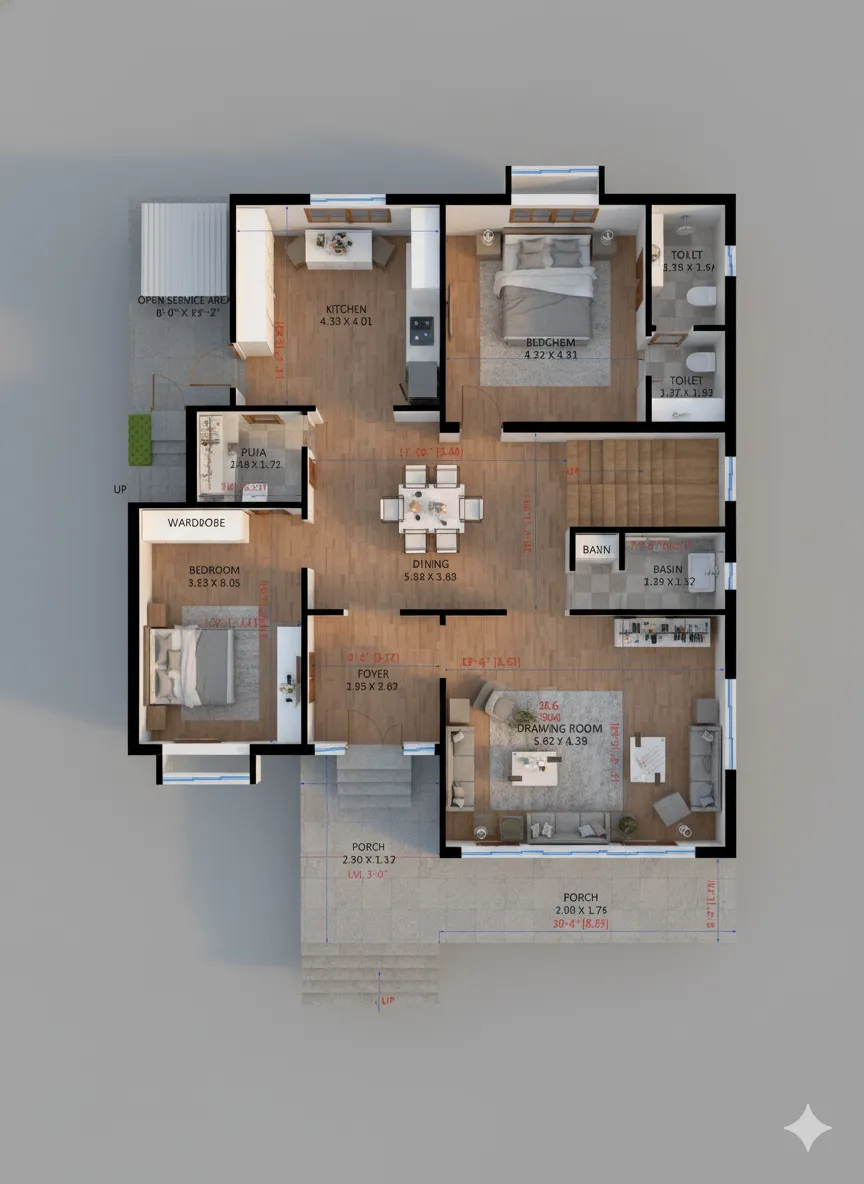
In one specific 25×40 project, we adjusted the wall alignment and shifted the staircase…
and the client remarked: “It’s the exact same area, but it *feels* twice as big.”
Step-by-Step Smart Floor Construction Tips to Maximize Space
Let’s now look at some practical, construction-level tips.
1. Optimize Wall Thickness
This might seem like a minor detail, but its impact is significant.
The Problem:
Unnecessarily thick walls consume valuable space.
The Solution:
Maintain the minimum required thickness while ensuring structural safety.
The Real Tip:
Do not make every single wall thicker than absolutely necessary.
2. Be Strategic with Column Placement
If columns are placed in the wrong spots, the entire planning scheme falls apart.
What to Do:
Align columns with the walls whenever possible
Avoid blocking open spaces or walkways

3. Opt for an Open Layout Construction
More walls = a reduced sense of space. Construction tip:
Load-bearing vs column structure by planning the walls of the society.
4. Keep Staircase Design Efficient
- Stairs consume the most space.
- Best options:
- Dog-legged staircase
- L-shaped staircase
Tip:
Under-stair space waste mat hone do.
5. Do proper slab planning
Slab height and beam placement also matter.
What to do:
- Keep proper height (avoid too low)
- Keep beam alignment smooth
6. Use Vertical Space
Floor planning is not just horizontal.
Use:
- loft storage
- vertical cabinets
7. Combine Utility Areas
Creating separate small spaces is wasteful.
Example:
- kitchen + utility
- bathroom + dressing
8. Keep Door & Window Placement Smart
It affects both movement and space feel.
Tip:
- put in the door corner
- Windows maximize natural light
9. Maintain Flooring Consistency
Different flooring breaks visual space.
Solution:
- Using the same flooring
- By choosing simple patterns
10. Plan Furniture During Construction
All these logs are ignored.
Problem:
- Furniture did not fit
Solution:
- Fix the layout before construction
Real Experience Tips
- Simple structure always performs better
- Open layouts site pe easy execute hote hain
- Do storage planning at early stage
- Staircase placement pe extra time do
In one project we just shifted the staircase…
And the entire living area became open.
Common Mistakes to Avoid
Avoid these mistakes by:
- Random column placement
- Thick walls everywhere
- keep the staircase in the middle
- Ignore ventilation
- Furniture planning skip karna
Biggest mistake:
“The plan will be adjusted later.”
FAQs –
1. How to maximize space during construction?
By planning layout, structure, and storage together.
2. Does wall thickness affect space?
Yes, thicker walls reduce usable space.
3. Which staircase saves space?
L-shaped and dog-legged staircases.
4. Should I plan furniture before construction?
Yes, it helps avoid space issues later.
5. How to use vertical space?
Use lofts and tall storage units.
6. What is the best layout for small plots?
An open layout with minimal walls.
7. Does flooring affect the perception of space?
Yes, consistent flooring makes a space appear larger.
8. How can one avoid construction mistakes?
Through proper planning and expert guidance.
Final Thoughts
The size of a home is fixed…
but its *feel* is entirely within your control.
I have personally witnessed this
with smart construction planning, even small homes can feel spacious.
If you:
- Optimize your walls
- Design your staircase smartly
- Adopt an open layout
Then your home will automatically feel larger.
In the end, just remember one thing
Space isn’t created; it is designed.