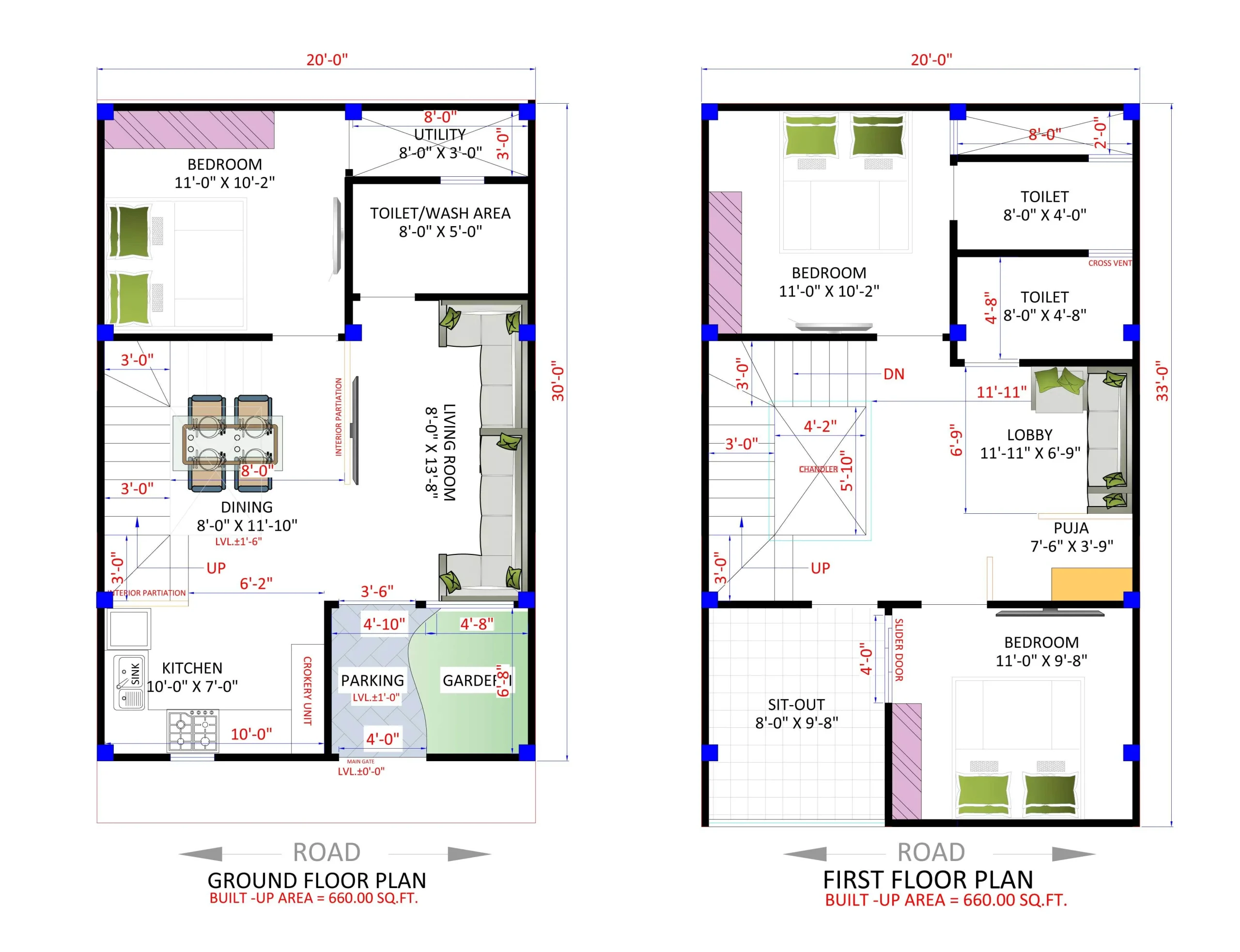
The blog explains the science behind perfect room sizes in house planning and how proper dimensions impact comfort, movement, lighting, and ventilation. It highlights standard room sizes and practical design principles to create functional and spacious homes. The key idea is that smart planning matters more than just bigger spaces.
“Is the room size right or not? This confusion is something everyone faces before construction even begins.”
Before building a home, the most common discussions revolve around:
- How big should the bedroom be?
- Will the living room feel spacious or cramped?
- What is the perfect size for the kitchen?
And honestly, most people plan based on guesswork.
I have personally observed this in numerous projects
people copy room sizes from Pinterest or a pre-made floor plan,
only to realize later:
“This room looked great in the design, but in real life, it feels uncomfortable.”
There is no “random rule” for room sizes.
There is a proper logic behind it the science of space.
Today, we will understand in simple Hinglish
what constitutes the science of perfect room sizes and how to determine them.
What Are Perfect Room Sizes in House Planning?
A perfect room size doesn’t simply mean “big” or “small.”
It implies:
- Comfortable movement
- Proper furniture placement
- A balance of ventilation and natural light
- Functional utility for daily living
Simply put:
“A room size is perfect only when you can live in it without any struggle.”
Why the Science of Room Size Matters in Construction
If the room sizes are incorrect:
- Space gets wasted
- Furniture doesn’t fit properly
- Movement becomes uncomfortable
- The home feels cluttered
And if they are correct:
- The home naturally feels spacious
- Daily life becomes smoother
- Maintenance becomes easier
The Science Behind Perfect Room Sizes
1. Human Movement Space
Every room requires a minimum amount of space for movement.
The basic logic involves:
- Walking space
- Clearance around furniture
- Space for opening doors
Example:
There should be at least 2 to 2.5 feet of clearance around the bed.
A Real-World Insight
I once observed a 2BHK apartment
the bedroom dimensions were correct, but there was no adequate walking space.
The result: the room felt cramped.
2. The Logic of Furniture Placement
Room sizes should be planned specifically around the furniture they will accommodate. Bedroom:
Bed + wardrobe + movement space
Living Room:
Sofa + TV unit + circulation
Kitchen:
Working triangle (sink, stove, fridge)
Tip:
The room is designed according to the furniture first, and then for the empty space.
3. Natural Light Science
Room size directly affects light distribution.
Principle:
- Smaller deep rooms = darker feel
- Wider rooms = better light spread
Real Experience
Despite having a window in a narrow bedroom, light was still not reaching.
4.Ventilation Flow
Airflow is directly related to room size.
Good Design:
- Cross ventilation is possible
Bad Design:
- Air trap ho jaaye
5. Psychological Comfort Factor
Room size is not just physical it is also mental.
Effect:
- Too small room → feel stressed
- Too big empty room → feel disconnected
Ideal:
Balanced proportion
Standard Room Sizes
1. Bedroom Size
Ideal range:
- 10×10 ft (compact)
- 12×12 ft (standard)
- 14×16 ft (premium)
Tip:
Wardrobe space must be included in the master bedroom.
2. Living Room Size
Ideal range:
- 12×15 ft
- 14×18 ft (comfortable family use)
Important:
Entrance flow should be clear.
3. Kitchen Size
Ideal range:
- 8×10 ft (small)
- 10×12 ft (standard modular kitchen)
Science:
Work triangle distance should be balanced.
4. Bathroom Size
Ideal:
- 4×7 ft (minimum)
- 5×8 ft (comfortable)
Tip:
Plan wet & dry separation.
5. Dining Area
Ideal:
- 8×10 ft minimum

Step-by-Step: How to Decide Perfect Room Sizes
Step 1: Family Needs Samjho
- How many logs are left?
- What is lifestyle?
Step 2: Make Furniture List
First decide the furniture of each room.
Step 3: Add Movement Space
Add walking space around every furniture.
Step 4: Plan Light & Ventilation
Window placement is important.
Step 5: Avoid Over-Sizing
Bad rooms = wasted space.
Step 6: Maintain Proportions
Every room should have balance.
Real Experience Tips
Symmetry Matters
Balanced room shapes give better feel.
Avoid Long Narrow Rooms
These are the most uncomfortable layouts.
Square Rooms Work Best
Easy to design + comfortable usage.
Door placement is important
Wrong door placement kills space.
Ceiling Height Impact
Higher ceiling = better spacious feel.
Common Mistakes in Room Size Planning
1. Using Guesswork
Deciding room size without logic.
2. Copying Internet Plans
Every plot is different.
3. Ignoring Furniture Size
Later mismatch has been created.
4. Over Large Rooms
Empty feeling is created.
5. Poor ventilation planning
Airflow appears to be blocked.
6. No Storage Planning
Clutter has increased.
Smart Design Hacks for Perfect Room Sizes
Use Open Layout
Space appears bigger visually.
Use Sliding Doors
Add Windows on Opposite Walls
Better airflow.
Use Light Colors
- Rooms feel bigger and feel hotter.
- Avoid Heavy Furniture
- Minimal design is best.
FAQs –
1. What is the perfect bedroom size?
12×12 ft is considered a standard comfortable size.
2. Why do room sizes matter in house planning?
They affect comfort.movement, light, and ventilation.
3. Can small rooms feel spacious?
Yes, with smart design and lighting.
4. What is the ideal kitchen size?
10×12 ft is ideal for modular kitchens.
5. Why avoid long narrow rooms?
They feel cramped and reduce usability.
6. Does ceiling height affect room size feeling?
Yes, higher ceilings make rooms feel larger.
7. Should furniture be planned before construction?
Yes, it helps avoid space issues later.
8. What makes a room feel uncomfortable?
Poor layout, bad ventilation, and wrong proportions.
Final Thoughts
Perfect room size does not just mean numbers.
I’ve personally observed
houses of similar area:
One feels comfortable
and one feels cramped.
The difference lies in just one thing:
“Design intelligence.”
If you plan room sizes with science:
The home will be comfortable
It will be functional
And you will enjoy long-term happy living.
Finally, remember one simple line:
“Perfect room size isn’t about bigger space… it’s about smarter space.”