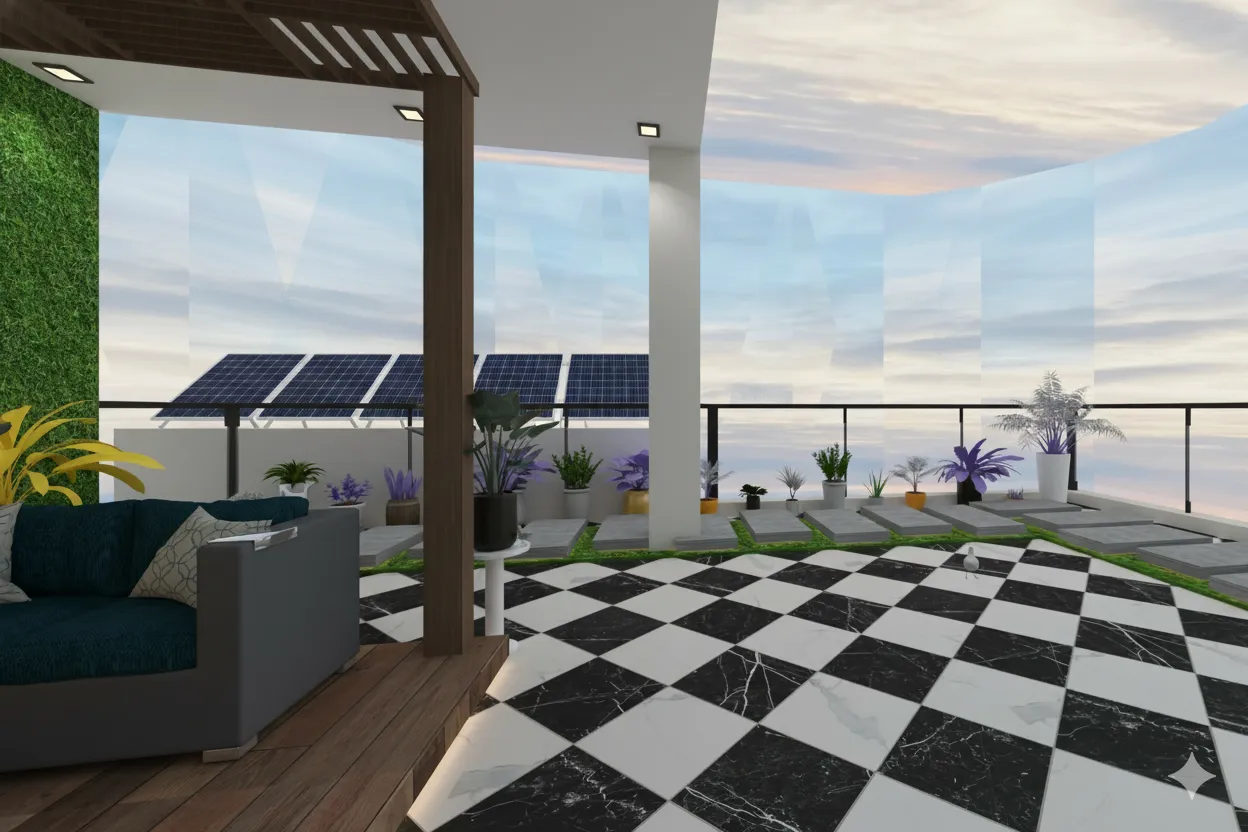
Solar panel planning ensures your system works efficiently and gives maximum savings on electricity bills. By selecting the right system size, proper direction, and avoiding shadows, you can get better performance. A well-planned solar setup becomes a reliable and long-term investment for your home.
The electricity bill delivers a shock every month… and if the power goes out on top of that, the frustration only mounts.
That’s when a thought crosses your mind
“Let’s get solar panels installed.”
But then, the confusion begins:
What size system do I need?
How much will it cost?
How will it be installed on the roof?
Is it worth it or not?
I have personally observed solar planning in numerous residential projects and there is one common mistake:
People install solar systems without any prior planning.
The result?
- Low efficiency
- Wasted space
- Failure to recover the investment
That is why, today, we will understand Solar Panel Planning for Residential Buildings in detail—in a simple and practical manner.
What is a Solar Panel System?
In simple terms:
A solar panel converts sunlight into electricity.
The main components of the system are:
- Solar panels
- Inverter
- Battery (optional)
- Mounting structure
This system does the following for your home:
- Supplies electricity
- Reduces your electricity bill
Why Solar Panel Planning is Important
If the planning is flawed:
- Panels may be installed facing the wrong direction
- You get lower output
- The payback period increases
I once saw a house where the panels were installed in the shade… and the output dropped by as much as 40%.
That is why planning is everything.
Solar Panel Planning for Residential Buildings
Now, let’s get to the actual practical points.
Roof Space Calculation
First things first:
- Measure your roof area.
Approximate requirement:
- A 1 kW system requires 80–100 sq ft of space.
Pro tip:
Leave some extra space for future expansion.
Direction & Tilt Angle
In India, the best orientation is:
- South-facing
Tilt angle:
- Approximately 20–30 degrees
This maximizes the capture of sunlight.
Shadow Analysis
Check for:
- Nearby buildings
- Water tanks
- Trees
The effect of shadows:
- It drastically reduces the system’s output.
System Size Selection
Check your electricity consumption patterns.
Example:
- A 2–3 BHK home → A 2kW to 5kW system
Make your decision based on your monthly electricity bill.

On-Grid vs Off-Grid System
On-Grid System
- Connected to the grid
- Battery not hoti
- Cost has become lower
Off-Grid System
- Battery backup is happening
- Best for power cut areas
Inverter Selection
Inverter is the brain of the solar system.
Choose:
- Good quality inverter
- Proper capacity
Structural Strength Check
- Roof should be strong.
- Concrete slab is ideal.
I have personally seen that installation on weak roof is risky.
Wiring & Safety
Proper wiring is important.
Include:
- Earthing
- lightning protection
Step-by-Step Solar Planning Guide
Step 1: Analyze Electricity Usage
Calculate monthly units.
Step 2: Decide System Size
Select kW according to usage.
Step 3: Do Roof Inspection
Check space and structure.
Step 4: Choose the Right Vendor
Select experienced installer.
Step 5: Installation Planning
Finalize direction, tilt, spacing.
Step 6: Testing & Monitoring
By tracking system performance.
Real Experience Tips & Pro Advice
- Shade avoid
- Even small shadow reduces output.
- Panel cleaning done regularly
- Dust reduces efficiency.
- By checking subsidy
- Government schemes are available.
- With future expansion plan
- System upgrade should be easy.
- Avoid cheap systems
- Low quality system causes long-term loss.
Common Mistakes to Avoid
- Wrong Direction Installation
- Output appears to be low.
- Ignoring Shadow
- Efficiency has dropped.
- Undersized System
- Electricity does not need cover.
- Poor Quality Components
- Frequent issues have arisen.
- No Maintenance
- Dust and dirt reduce performance.
FAQs
How much space is needed for solar panels?
Approx 80–100 sq ft for 1 kW.
Is solar worth for home?
Yes, for long-term savings.
How long do solar panels last?
Do solar panels work in cloudy weather?
Yes, but output has reduced.
What is payback period?
Is maintenance required?
Yes, cleaning is necessary.
Can I run AC on solar?
Yes, provided the system is properly sized.
Conclusion
Installing solar panels is a smart decision… but without proper planning, this investment can go to waste.
Understanding the planning process for installing solar panels on residential buildings is essential if you wish to maximize the benefits.
I have personally observed that systems with proper planning can reduce electricity bills by 60–80%.
Conversely, those with poor planning fail to deliver the expected results.
Therefore, always focus on:
The right system size
Quality installation
Only then will your solar system be truly efficient and profitable in the long run.